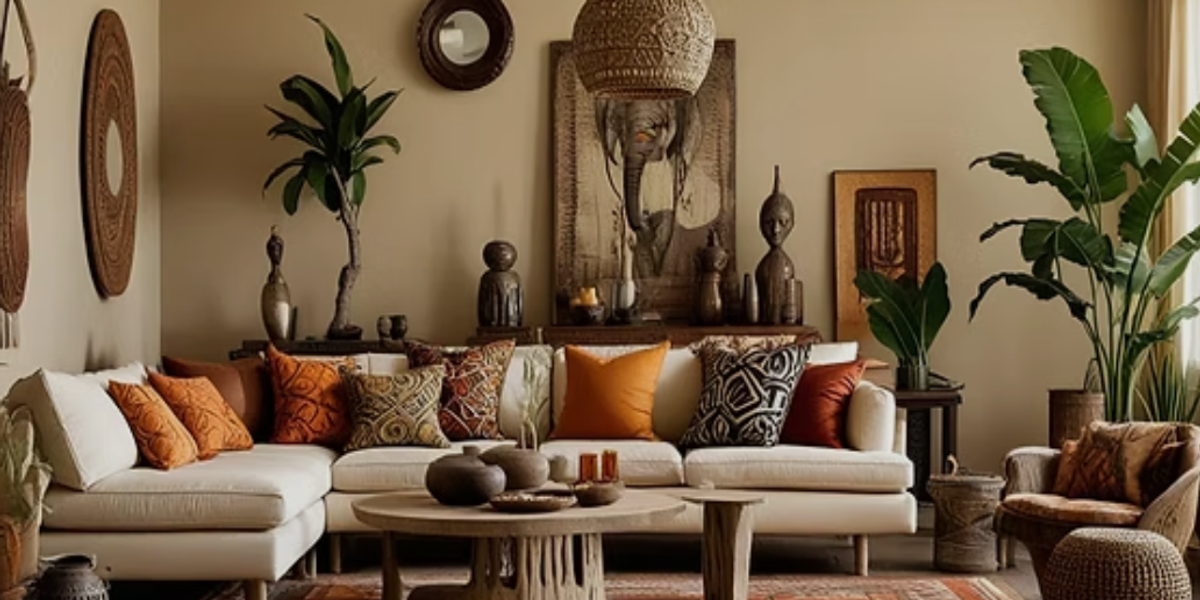
Cultural Significance of African Home Design

Andy Akinbamini
Click to view profile
Your home speaks before you do. In Africa, domestic spaces never functioned as mere shelter from the weather but as cultural statements declaring who you are, where you come from, and what matters most to your community. African home culture embodies profound cultural and spiritual symbolism, with shapes, layouts, and materials reflecting the worldviews of diverse communities across the continent.
Architecture becomes autobiography written in mud, stone, and thatch. Every design choice from circular layouts to specific decorative patterns carries meaning that residents understand instinctively, while outsiders might dismiss as random aesthetics. These aren't houses; they're cultural textbooks ensuring children learn identity simply by growing up within intentionally designed spaces.
Fractal Patterns Mirror Community Organization Through Design
West African architecture uses fractal scaling, in which small parts resemble larger ones, such as circular villages composed of circular houses. This mathematical approach reflects philosophical beliefs about harmony between the individual and the community. Homes cluster together, mirroring household structures, creating layered, repeating designs that promote interaction, shared resources, and collective lifestyles emphasizing collaboration over isolation.
Materials Selection Demonstrates Environmental Wisdom and Sustainability
Vernacular architecture uses locally sourced materials and traditional construction techniques passed down through generations, designed to suit local climate and cultural needs. West African earthen walls and thatched roofs provide natural insulation against extreme heat. Niger Delta stilted houses protect inhabitants from seasonal flooding.
This sustainable approach creates structures that are adapted to local environments without requiring imported materials or technologies that disconnect communities from their landscapes.
Trends Show Symbolic Decoration Communicating Cultural Narratives
Burkina Faso's Tiebele Royal Courtyard features elaborately decorated houses with intricate geometric patterns painted in black, white, and red using natural dyes. The designs represent protection, fertility, and spiritual beliefs, with animal motifs like crocodiles revered in Kassena culture.
Women traditionally carry out this painting process, emphasizing gender roles in cultural preservation and proving that African home culture transforms architecture into visual storytelling.
Spatial Organization Reflects Social Hierarchies and Values
Dogon houses in Mali follow "rectangles within rectangles" patterns symbolizing human forms, with exterior walls representing bodies and inner spaces signifying spirit and ancestry.
Granaries among the Tallensi serve as food storage and as sacred structures that connect material worlds with spiritual realms. These deliberately organized domestic spaces constantly remind occupants of their roles within the family and community across generations.
Contemporary Design Preserves Cultural Identity Through Modern Adaptation
Contemporary African architecture blends traditional elements with modern techniques, addressing urbanization whilst maintaining cultural authenticity. Architects incorporate sustainable materials, such as bamboo, alongside traditional design principles, including natural ventilation and spatial orientation.
This fusion creates buildings that function as cultural artifacts, promoting sustainability and reflecting African identity rather than abandoning heritage for globalized architectural homogeneity.
African home culture expresses identity through design. Domestic culture transforms houses into storytelling canvases reflecting community values and spiritual beliefs.
Visit our website for insights, creator stories, and trends shaping Africa.